
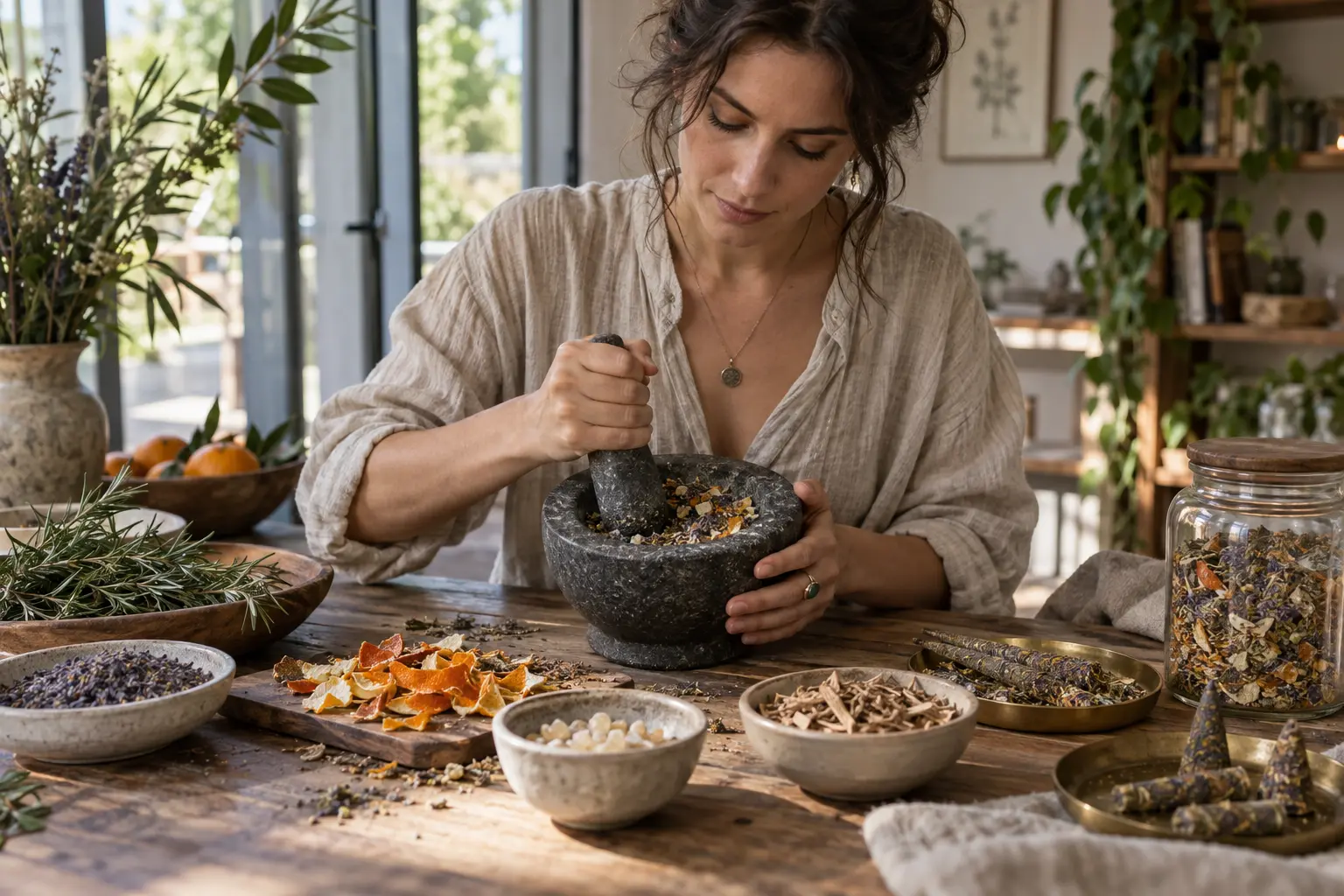
Natural incense should not mean gathering random plants, setting them on fire, and assuming natural smoke is harmless. Smoke is still particulate matter. Some plants are irritating or toxic when burned, and pets, children, pregnancy, asthma, migraines, and shared ventilation all change what is appropriate. The most grounded practice is knowing every ingredient, using very little, ventilating well, and choosing a simmer pot or dry scent bowl when smoke is not suitable.
Begin with a scent purpose
Decide whether you want something bright, forested, floral, grounding, or resinous. Do not begin with a spiritual claim. Begin with the actual scent experience you want in the room. A useful beginner blend is two parts dried rosemary, one part dried orange peel, one part lavender, and one-half part frankincense resin.
Ingredients that work well
- Fully dried rosemary, lavender, sage from your garden, thyme, bay, or mint
- Untreated cedar shavings from a known botanical source
- Orange or lemon peel dried until brittle
- Frankincense, myrrh, copal, or pine resin sold for incense use
- Makko powder as a plant-based binder for cones
Do not burn oleander, poison ivy, yew, treated wood, unknown mushrooms, dyed flowers, essential oils, or plants gathered from roadsides. Avoid white sage unless it is ethically sourced and culturally appropriate. Culinary sage, rosemary, and locally abundant plants are practical alternatives.
Dry the materials completely
Spread herbs and thin citrus peel on a screen in a dry shaded place. Turn daily. They are ready when they snap rather than bend. Any remaining moisture can cause mold and prevents even burning. Store each ingredient separately in a labeled jar before blending.
Make loose incense
- Measure ingredients by volume. Keep a written record so a good blend can be repeated.
- Grind each material separately with a mortar and pestle. Resins become sticky when warm, so freeze them for ten minutes before grinding.
- Combine the powders and smell the unburned blend. Adjust with small increments.
- Place one-half teaspoon in a labeled glass jar and let it rest for twenty-four hours. The scent becomes more integrated.
Burn loose incense safely
Use a fireproof burner filled with sand on a stone or metal surface. Light a self-igniting charcoal disk outdoors with tongs, wait until it is fully gray, then bring it to a well-ventilated area. Add only a pinch of incense. Never hold charcoal in your hand, never leave it unattended, and keep it entirely inaccessible to children and animals. It remains hot long after it looks finished.
Make simple incense cones
Mix two tablespoons aromatic powder with one tablespoon makko. Add warm water a few drops at a time until the mixture holds together like firm clay. Knead for two minutes. Form small cones no taller than one inch with an open, level base. Dry on cardboard for five to seven days, turning daily. Test one outdoors. If it goes out, increase makko slightly. If it burns too quickly, make the cone denser or reduce binder.
Build balanced blends
Use a three-part structure: two parts body, one part accent, and one-half part resin. Try rosemary, orange, and frankincense for clarity; cedar, thyme, and pine resin for a forest blend; lavender, rose petals, and myrrh for a soft evening scent. Rose petals add more symbolism than fragrance, so do not keep adding handfuls expecting perfume.
Smoke-free alternatives
For a toddler home, apartment, asthma-sensitive household, or shared HVAC system, use the same dried blend in a cloth sachet, warming dish designed for botanicals, or simmer pot. A dry bowl can be refreshed by crushing the herbs between your fingers. A ritual does not become less meaningful because nothing is burning.
Build and record a balanced blend
Think in roles: leaves and flowers form the body, wood or root adds depth, and resin supplies a concentrated base note. Start by the teaspoon with two parts gentle herb, one part supporting aromatic, and no more than one quarter part resin. Grind ingredients separately and warm only a pinch. Try rosemary, lemon peel, and frankincense for clarity; lavender, rose, and cedar for evening; or bay, orange, and a shaving of cinnamon for autumn. Change one element at a time and record the result.
Natural smoke is still smoke. Ventilate, keep babies, birds, pets, and sensitive people away, and do not burn unfamiliar plants. Put charcoal in a sand-filled fireproof bowl on a stable heatproof surface, keep water nearby, and extinguish it completely. Label finished jars with every ingredient and the date.
Keep a batch record
Write the date, exact ingredients, source, ratios, method, scent before and after burning, how the body responded, and whether anyone experienced irritation. Dispose of a blend that causes coughing, headache, nausea, or breathing changes. Good spiritual practice includes observation, consent, and stopping when the body says no.