
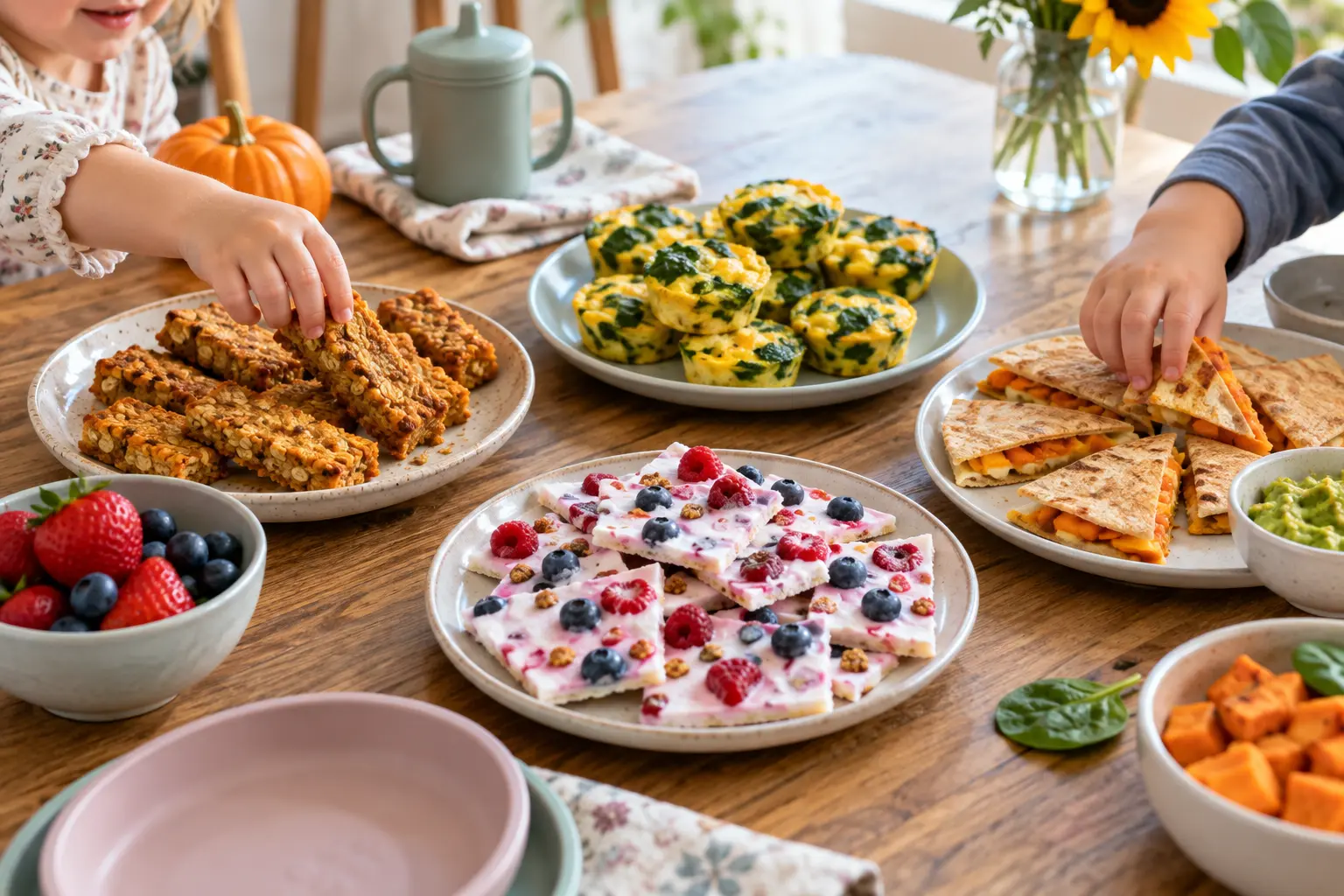
A toddler-approved recipe is not one every toddler will eat. It is a recipe designed around toddler realities: small hands, variable appetite, strong texture preferences, limited patience, and the need to see a familiar food beside something new. The goal is repeated, pressure-free exposure, not winning a vegetable battle.
Check allergies, choking guidance, and your child's feeding needs. Cut round foods lengthwise, cook firm vegetables until soft, avoid whole nuts and popcorn, and sit with children while they eat. If growth, swallowing, pain, or extreme restriction is a concern, speak with a pediatrician or feeding specialist.
1. Pumpkin oatmeal fingers
Mix two cups rolled oats, one cup pumpkin puree, one mashed banana, two eggs, one teaspoon cinnamon, and one-half cup milk. Spread in a lined eight-inch pan and bake at 350°F for twenty-five minutes. Cool completely and cut into fingers. Serve with yogurt for dipping. Freeze pieces individually. For an egg-free version, use two tablespoons ground flax mixed with five tablespoons water, understanding the texture will be softer.
2. Spinach and cheddar egg muffins
Whisk eight eggs with one-quarter cup milk. Stir in one cup finely chopped cooked spinach and one-half cup grated cheddar. Pour into a greased mini-muffin tin and bake at 350°F for twelve to fourteen minutes. The spinach should be chopped small enough that long strands do not pull from the bite. Serve one muffin beside toast or fruit, not as a test of whether the child likes spinach.
3. Sweet potato and white bean quesadilla
Mash one cooked sweet potato with one cup rinsed white beans, two tablespoons plain yogurt, and a pinch of cumin. Spread thinly on a whole-grain tortilla, add mild cheese, fold, and toast in a skillet. Cool and cut into narrow strips or small triangles appropriate to the child. The bean flavor is mild, the sweet potato keeps the filling moist, and the tortilla provides a familiar boundary.
4. Berry yogurt bark
Spread two cups full-fat plain yogurt on a parchment-lined tray. Swirl in mashed berries and sprinkle with finely ground oats. Freeze until firm, then break into pieces. Let a piece soften for a minute before serving so it is not dangerously hard. This is a cold snack, not a substitute for all dairy or fruit.
5. Green pasta sauce without secrecy
Blend one cup cooked peas, one cup packed spinach, one-half avocado, one-quarter cup grated Parmesan, lemon juice, and enough pasta water to make a smooth sauce. Toss with small pasta shapes. Tell the child what is in it. Calling it green sauce is fine; pretending vegetables are absent teaches distrust when they discover them.
Build a toddler plate
Offer one accepted food, one learning food, and one source of energy or protein. A plate might contain quesadilla, cucumber, and strawberries. Keep portions tiny: one tablespoon of each food is enough to begin. More can be added. Large portions can feel like a demand.
What to say at the table
Describe rather than persuade. “The muffin is warm.” “The berry is tart.” “You can touch it or leave it.” Avoid “just one bite,” dessert bargaining, and praise for cleaning the plate. Adults decide what, when, and where food is served. Children decide whether and how much to eat from what is offered.
Real-life troubleshooting
If the child rejects mixed foods, serve components separately. Put pasta beside a spoonful of green sauce for dipping. If they dislike wet textures, toast the quesadilla longer or bake oatmeal thinner. If they eat a food one week and refuse it the next, continue serving it occasionally without announcing the change as a problem.
What toddler-approved actually means
Approval may mean touching, smelling, licking, or tolerating a food on the plate. Serve one familiar item beside a small portion of something newer. The adult decides what and when; the child decides whether and how much. Avoid pressure, bargaining, praise for bites, or dessert as payment. Appetite changes with growth, sleep, illness, activity, and time of day.
Prepare food for the child's developmental stage. Whole grapes, popcorn, nuts, hard raw vegetables, spoonfuls of nut butter, and round coin-shaped foods can be choking hazards. Sit together and supervise. Build simple plates from one protein, one grain or starch, one produce item, and one fat or sauce. Components can stay separate. Frozen food and leftovers count. One rejected dinner does not define a child's nutrition or a parent's care.
Prep once, use all week
Freeze oatmeal fingers, egg muffins, and quesadilla filling in small portions. Keep berries and cooked sweet potato ready. A useful toddler recipe reduces caregiver labor as well as improving nutrition. The best plan is not the most inventive menu. It is the one you can serve calmly and repeat without exhausting yourself.